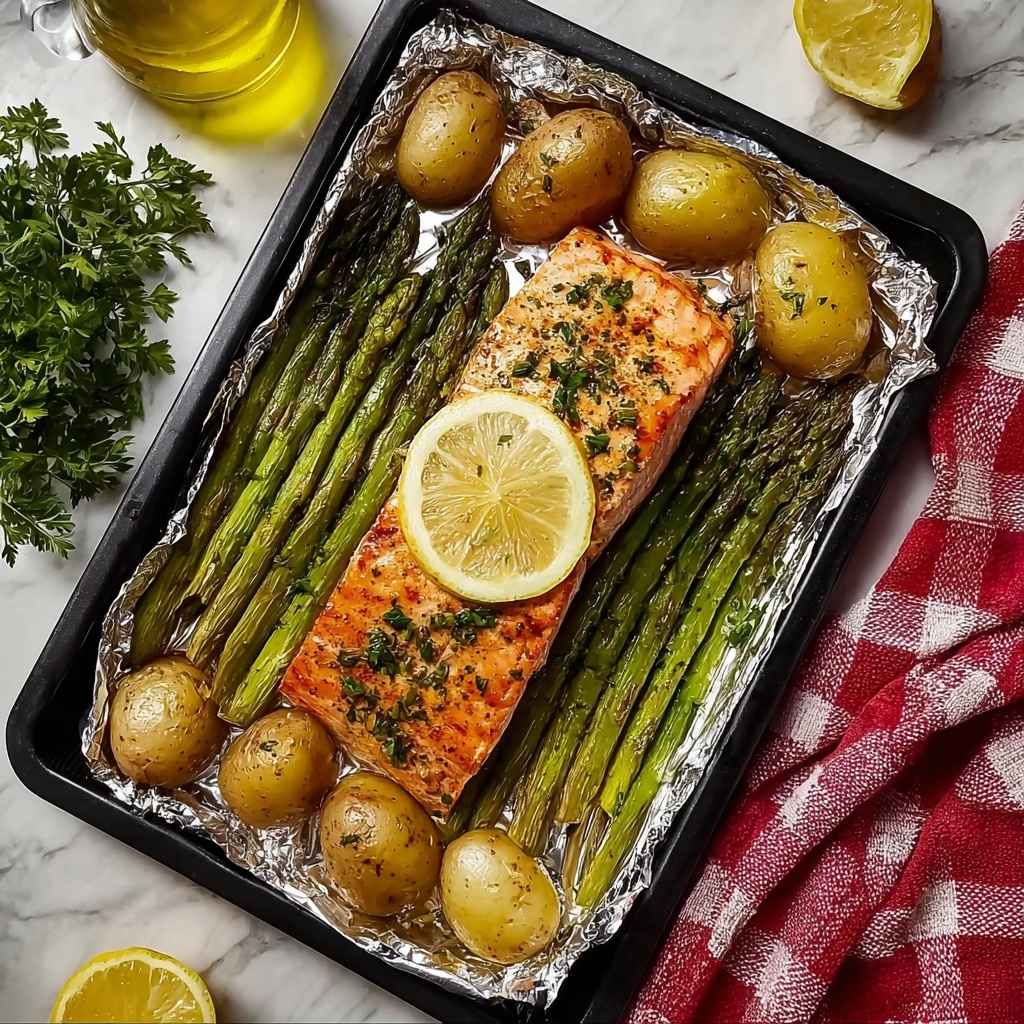
If you’ve been hunting for a dish that feels both elegant and effortlessly simple, I can’t recommend the Juicy Salmon with Asparagus and Potatoes in Foil Recipe enough. This meal is like a warm, comforting hug on a plate, combining tender, flaky salmon with crisp asparagus and perfectly cooked potatoes—all steamed to perfection inside foil packets that lock in every bit of flavor and moisture. The interplay of buttery garlic, fresh dill, and zesty lemon creates such a vibrant taste experience that you’ll want to make this recipe again and again.
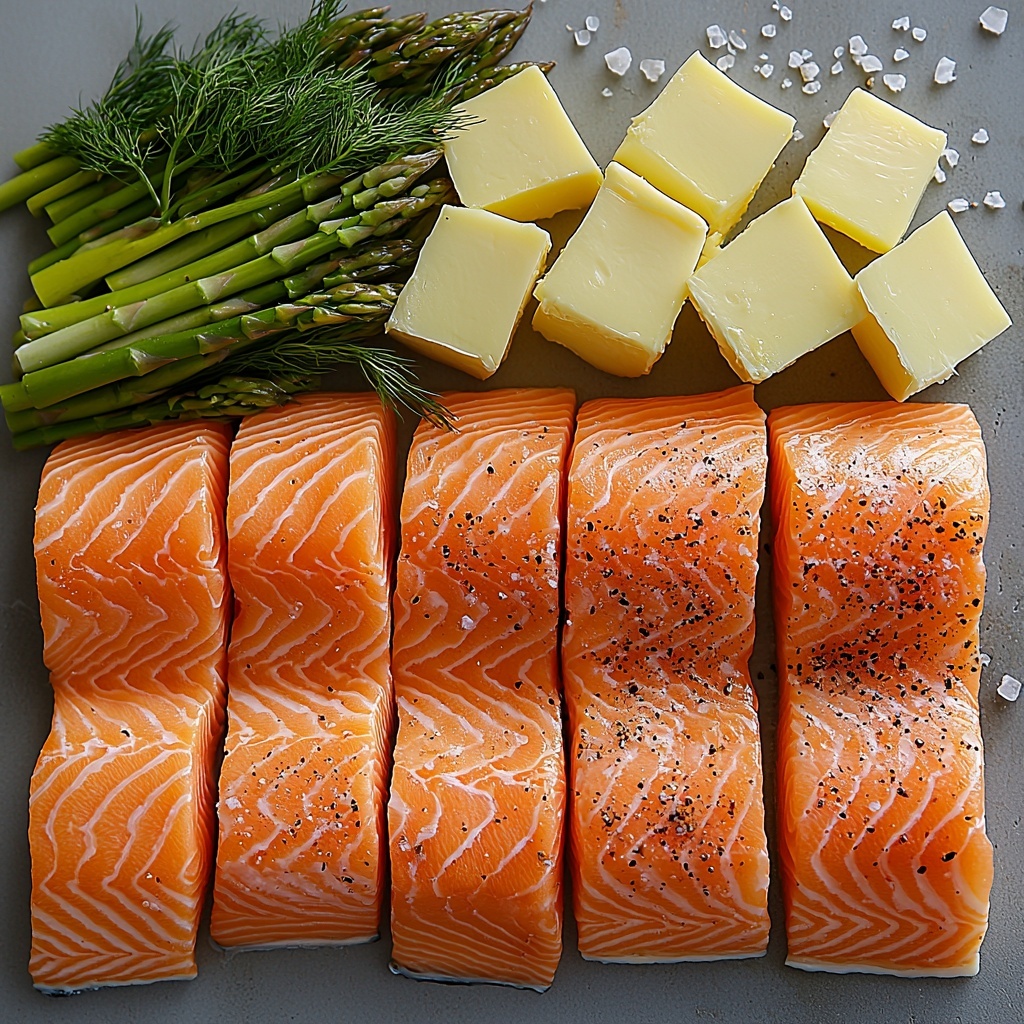
Ingredients You’ll Need
The beauty of this recipe lies in its simplicity and the freshness of its ingredients. Each one plays a crucial role in building layers of flavor, texture, and color that make every bite irresistible.
- Black pepper (1/4 tsp): Freshly ground is best to give a bright, aromatic kick without overpowering the other flavors.
- Salt (1/2 tsp): Enhances all the natural flavors, especially the salmon’s rich taste.
- Salmon fillets (4, 5 to 6 oz each, skin-on preferred): Choosing skin-on helps keep the fillets moist and flavorful as they cook in the foil.
- Butter (4 tbsp, preferably Kerrygold unsalted): Adds a rich creaminess that melds perfectly with garlic and lemon.
- Garlic cloves (4, minced): Infuses the dish with that classic savory aroma that makes your mouth water.
- Asparagus (1 bunch, trimmed to 4-inch pieces): Brings a fresh, slightly crunchy texture and gorgeous green color.
- Potatoes (1 lb, sliced into 1/4-inch rounds): These delightfully tender rounds soak up the butter and juices beautifully.
- Lemon (1 large, cut into wedges): Provides bright citrus notes that balance the richness of the salmon and butter.
- Fresh dill (about 2 tbsp chopped): Offers a herbaceous freshness that complements seafood like nothing else.
How to Make Juicy Salmon with Asparagus and Potatoes in Foil Recipe
Step 1: Prepare the Foil Packets
Begin by tearing four large sheets of heavy-duty aluminum foil, big enough to comfortably wrap each salmon fillet with its veggies. The foil packets are the secret to locking in moisture and flavor, so make sure they are nicely sized and ready to wrap your ingredients snugly.
Step 2: Layer the Potatoes
Arrange the sliced potatoes evenly on the bottom of each foil sheet. These act as a delicious, starchy base and will steam perfectly inside the packets. Season them lightly with a pinch of salt and pepper to enhance their natural sweetness.
Step 3: Add the Asparagus and Salmon
Next, scatter the trimmed asparagus pieces over the potatoes. Then carefully place a salmon fillet on top, skin side down. This layering ensures even cooking and keeps the asparagus crisp-tender while the salmon remains juicy and flaky.
Step 4: Butter, Garlic, and Seasoning
Dot each salmon fillet with a tablespoon of butter and spread some of the minced garlic over everything. Sprinkle salt and freshly ground black pepper on top, making sure every bite is bursting with flavor as it all melds during cooking.
Step 5: Add Lemon and Dill
Place a wedge or two of lemon right on the salmon to infuse a subtle citrus brightness during cooking. Finally, sprinkle the chopped fresh dill over the packets to add a fragrant, herbaceous note that perfectly complements the fish.
Step 6: Seal and Cook
Wrap each foil packet carefully, folding the edges to create a tight seal but leaving enough room inside for steam to circulate. Transfer the packets to a baking sheet and cook in a preheated 400°F oven for about 20 minutes—this gentle steaming cooks everything evenly while maintaining moisture.
How to Serve Juicy Salmon with Asparagus and Potatoes in Foil Recipe
Garnishes
Once you unwrap those foil packets, the aroma and colors will make your heart sing. For an extra touch, sprinkle freshly chopped dill or a pinch of lemon zest on top. A small drizzle of extra virgin olive oil can add a subtle fruitiness that pairs perfectly with the buttery richness.
Side Dishes
This meal is wonderfully satisfying on its own but pairs beautifully with a crisp green salad dressed in tangy vinaigrette or some crusty bread to soak up the juices. If you want a little extra carb kick, a light wild rice pilaf or quinoa salad would also complement the flavors wonderfully without overwhelming the dish.
Creative Ways to Present
For a rustic yet elegant presentation, serve each foil packet on a wooden board directly at the table, letting guests unwrap their own individual portions. Alternatively, carefully transfer the salmon, asparagus, and potatoes to a warm platter and garnish with fresh dill sprigs and lemon wedges for a colorful family-style display.
Make Ahead and Storage
Storing Leftovers
If you’re lucky enough to have leftovers, store them in an airtight container in the refrigerator for up to 2 days. The flavors actually deepen overnight, making for a delicious next-day meal. Just be sure to cool the salmon and veggies completely before refrigerating to keep the texture intact.
Freezing
While this recipe is best enjoyed fresh, you can freeze the foil packets before cooking if you want to prep meals ahead. Wrap tightly and freeze for up to one month. When ready, thaw in the refrigerator overnight and bake as usual, allowing a little extra time for baking if needed.
Reheating
To reheat, gently unwrap the foil and place the salmon and vegetables in a baking dish covered with foil. Warm in a 325°F oven for about 10–15 minutes until heated through, taking care not to overcook and dry out the salmon. Adding a small pat of butter on top before reheating helps restore that luscious juiciness.
FAQs
Can I use frozen salmon for this recipe?
Yes, you can use frozen salmon fillets, but be sure to thaw them completely in the refrigerator before preparing the foil packets so they cook evenly and stay juicy.
Is it necessary to use skin-on salmon?
Using skin-on fillets helps keep the salmon moist and intact during cooking, but you can use skinless if you prefer; just handle carefully to avoid breaking the fish.
What type of potatoes are best for this recipe?
Yukon Gold or red potatoes work wonderfully because they hold their shape well and have a creamy texture that complements the salmon and asparagus.
Can I grill the foil packets instead of baking?
Absolutely! Grilling the foil packets over medium heat for about 15–20 minutes creates a lovely smoky flavor and an equally tender result.
How can I tell when the salmon is cooked perfectly?
The salmon should be opaque and flake easily with a fork but still feel moist. Overcooking will dry it out, so keep a close eye during the final minutes.
Final Thoughts
The Juicy Salmon with Asparagus and Potatoes in Foil Recipe is truly one of those dishes that brings comfort and elegance together effortlessly. It’s simple to prepare, full of gorgeous flavors, and perfect for a weeknight dinner or a special occasion. Once you try it, I’m confident it’ll become a beloved staple in your kitchen too. So wrap up those fillets, pop them in the oven, and get ready for a meal that feels just like a warm, delicious hug.
Print
Juicy Salmon with Asparagus and Potatoes in Foil Recipe
- Prep Time: 10 minutes
- Cook Time: 20 minutes
- Total Time: 30 minutes
- Yield: 4 servings
- Category: Dinner
- Method: Baking
- Cuisine: American
Description
This Juicy Salmon with Asparagus and Potatoes in Foil is an easy, flavorful one-pan meal perfect for a quick yet impressive dinner. Tender salmon fillets are seasoned and wrapped with fresh asparagus, thinly sliced potatoes, garlic, butter, and fragrant dill, then baked in foil packets to lock in moisture and enhance the natural flavors. The result is a perfectly cooked, juicy salmon with tender vegetables and hints of lemony freshness, making cleanup a breeze.
Ingredients
Salmon and Seasoning
- 4 salmon fillets (5 to 6 oz each, skin-on preferred)
- 1/2 tsp salt
- 1/4 tsp black pepper (freshly ground for better flavor)
- 4 tbsp butter (unsalted, Kerrygold recommended)
- 4 garlic cloves (minced)
- fresh dill (about 2 tbsp chopped)
- 1 large lemon (cut into wedges)
Vegetables
- 1 bunch asparagus (trimmed to 4-inch pieces)
- 1 lb potatoes (sliced into 1/4-inch rounds)
Instructions
- Preheat the oven: Set your oven to 400°F (200°C) and allow it to fully heat while you prepare the foil packets.
- Prepare the potatoes: Slice the potatoes into 1/4-inch rounds and lightly season with salt and pepper. Arrange them evenly on large sheets of aluminum foil to form the base layer of your packets.
- Add asparagus and garlic: Place trimmed asparagus pieces on top of the potatoes, then sprinkle the minced garlic evenly over the vegetables.
- Season salmon fillets: Pat salmon fillets dry with paper towels. Season them with salt and freshly ground black pepper. Place one fillet on top of each vegetable portion on the foil.
- Top with butter and dill: Place a tablespoon of butter on each salmon fillet, then sprinkle the chopped fresh dill over all components. Add a lemon wedge on the side inside the foil for extra flavor.
- Seal the foil packets: Fold the aluminum foil over the salmon and vegetables, sealing the edges tightly to create packets. This will trap steam and juice to cook the ingredients evenly.
- Bake the packets: Place the foil packets on a baking sheet and bake in the preheated oven for about 18-20 minutes, or until the salmon is cooked through and the potatoes are tender when pierced with a fork.
- Serve: Carefully open the foil packets (watch for steam), squeeze the lemon over the salmon and vegetables if desired, and serve immediately for a fresh, juicy meal.
Notes
- Skin-on salmon helps the fillet hold together during cooking and adds extra flavor and moisture.
- Make sure the foil packets are sealed tightly to prevent steam from escaping and drying out the food.
- You can swap asparagus for green beans or broccoli if preferred.
- Adjust seasoning and herbs to your taste; fresh thyme or parsley also work well.
- Use a meat thermometer to ensure salmon reaches an internal temperature of 145°F for safe consumption.
- For a crispier potato texture, parboil sliced potatoes for 5 minutes before assembling the packets.